
how the u.s. government
actually works
The three branches are only the beginning.
A clear, practical guide to how American government really works –
from the Constitution to your local town hall.
FOUNDATIONAL GUIDE • 10–12 MIN READ • LAST UPDATED: SEPTEMBER 2026Quick Answer
The United States is a constitutional republic with three branches. Congress creates federal laws and controls federal spending; the executive branch administers and enforces those laws; and the federal courts decide cases involving federal law and the Constitution. Each branch has tools that can limit the others, while state and local governments exercise separate powers that often affect daily life more directly.
What you’ll learn
The constitution is the blueprint
The U.S. Constitution, ratified in 1788, establishes the framework for the federal government, defines its powers and limits, and protects the rights of the people. It is designed to prevent the concentration of power and ensure a government of the people, by the people, and for the people.
The three branches at a glance
Legislative
Makes the Laws
U.S. Congress
House of Representatives
Senate

Executive
Enforces the Laws
The President
Vice President
Federal Agencies

Judicial
Interprets the Laws
Supreme Court
Federal Courts
Ensures Constitutionality
The legislative branch: congress
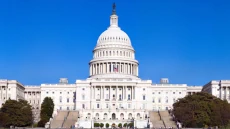
Established by Article I of the Constitution, the legislative branch is responsible for drafting, debating, and passing the laws that govern the United States. It is composed of a bicameral (two-chamber) Congress that operates out of the United States Capitol: the House of Representatives and the Senate.
The founders created two distinct chambers to balance the interests of states with large populations against those with smaller populations.
Feature | House of Representatives | Senate |
|---|---|---|
Total Members | 435 | 100 |
Representation | Apportioned by State Population | Equal (2 per state) |
Term Length | 2 Years | 6 Years |
Minimum Age | 25 Years old | 30 Years old |
Presiding Officer | Speaker of the House | Vice President |
While both chambers must pass identical versions of a bill for it to become a federal law, the Constitution grants each chamber unique, distinct responsibilities.
The House of Representatives:
Revenue Bills: Must initiate all legislation related to raising taxes or spending money.
Impeachment: Holds the sole power to formally charge federal officials, including the President, with misconduct.
Electoral Ties: Elects the President if no candidate receives a majority of electoral votes.
The Senate:
Impeachment Trials: Acts as the jury to convict or acquit officials impeached by the House.
Confirmations: Approves major presidential appointments, including Cabinet members, federal judges, and ambassadors.
Treaties: Ratifies international treaties negotiated by the Executive branch with a two-thirds majority vote.